Short Prompts vs Long Prompts: I Wrote a 38-Section Prompt and Got a Worse Result
I saw someone build a project around the look of a cartoon, and I liked the idea so much that I wanted to make something with a cartoon too. I picked Regular Show and decided to turn my portfolio into its living room: each VHS tape is one of my GitHub projects, and when you click one, Mordecai puts it into an old CRT and the project plays on the screen.
I built it with Claude, an AI coding assistant, over a couple of days. How it went was not what I expected, so I'm writing it down.
The long prompt (38 sections)
My first attempt was a short message with one image, and it came out pretty basic. I decided the problem was that I hadn't been specific enough, so I went the other way.
I put together a prompt with 38 numbered sections. Folder structure, component names, the names of the animation functions, the states of a state machine, eight milestones, a list of every image the project would need, how much each parallax layer should move. The first rule, in capital letters, was NO 3D. I was sure the room should be flat.
Claude did all of it. Every section, a commit after each milestone, docs, a deploy workflow. This is what I got:
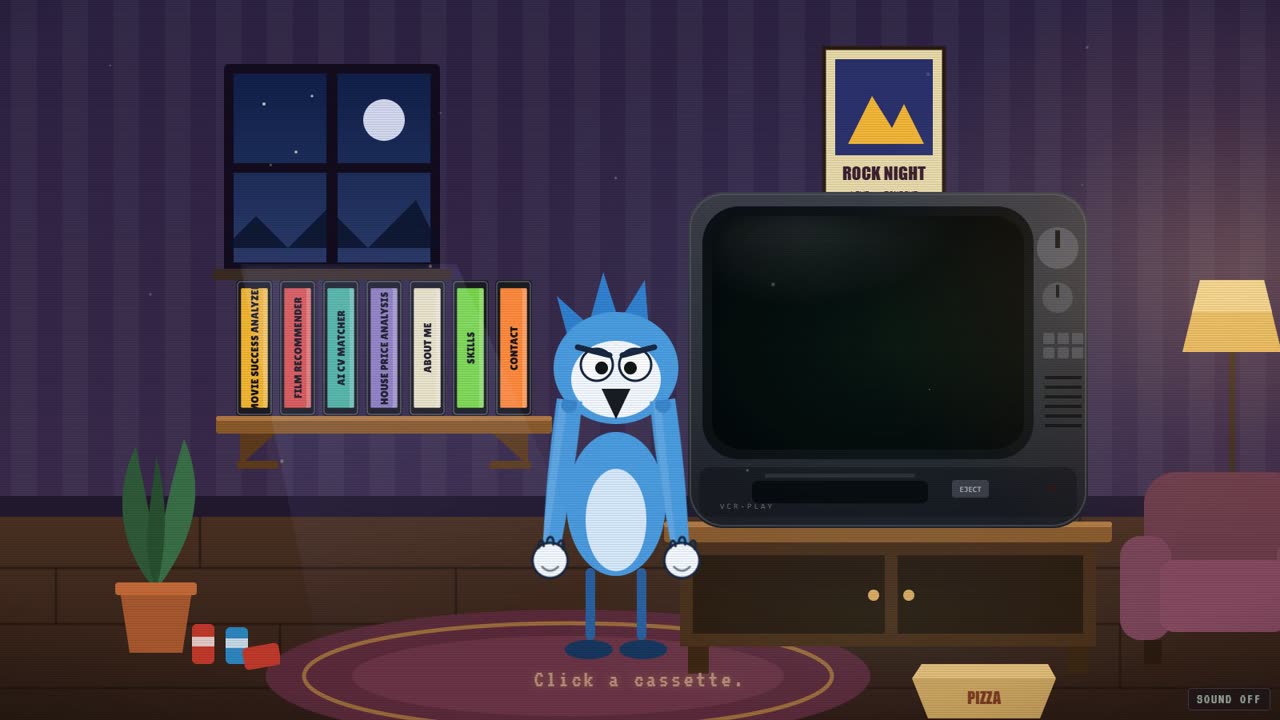
Mordecai stands in the middle of the room, full body. When you pick a tape he walks to the shelf, bobbing up and down, holds the tape against his chest and walks it over to the TV.
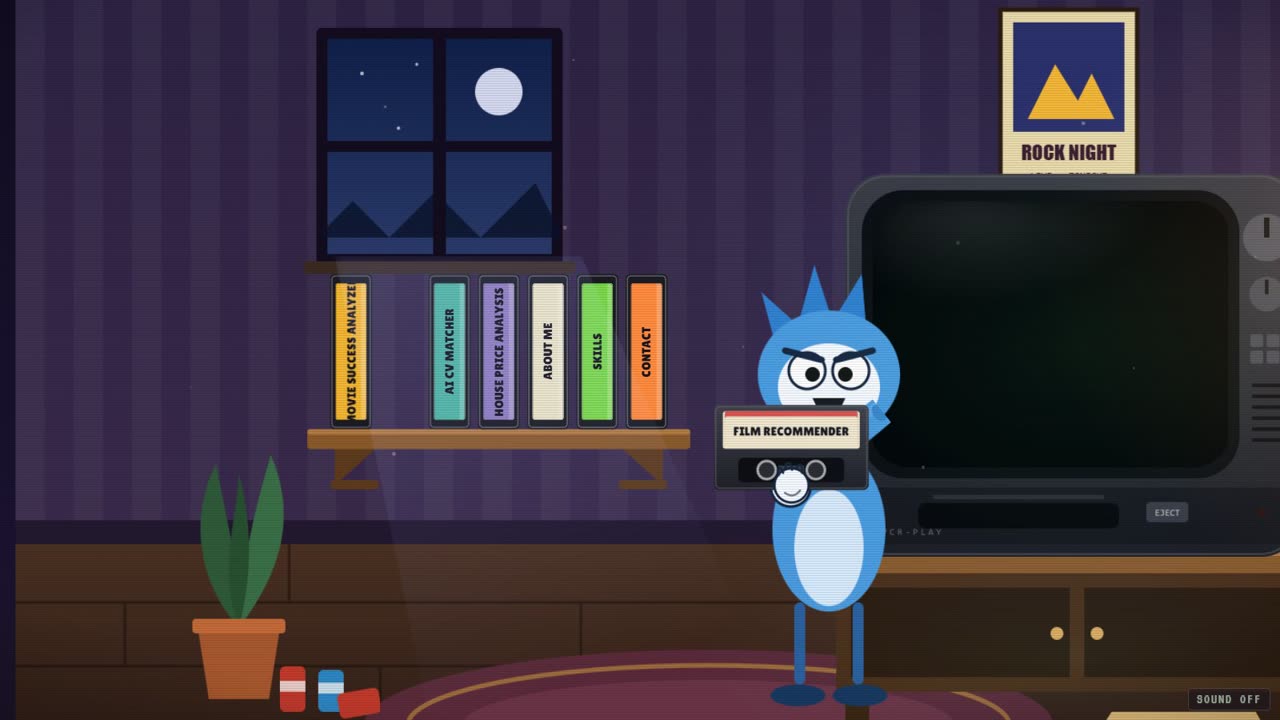
Honestly, my first reaction was: after explaining all of that, this is it? It worked, but it was nothing like what I had imagined.
I don't think the AI did a bad job, though. It did what I wrote. The problem was what I wrote: pages about how the code should be organised and almost nothing about how the thing should look or feel. Two days later I was asking for 3D anyway.
The short prompts
At some point I gave up on specs. I found a screenshot of the living room from the show and sent it with something like: make it look like this, these colours, this TV, Mordecai's hand. Keep my repos on the tapes. I'll leave the rest to you. (I actually wrote it in Turkish, but that's roughly it.)
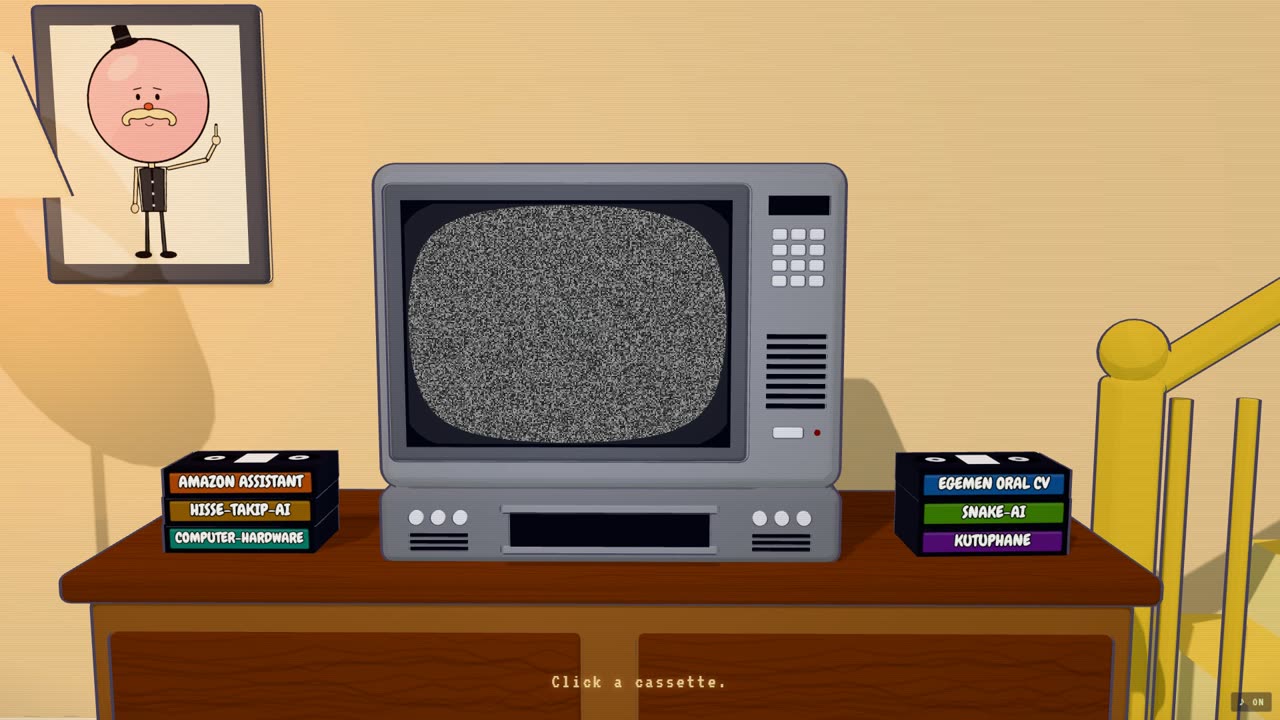
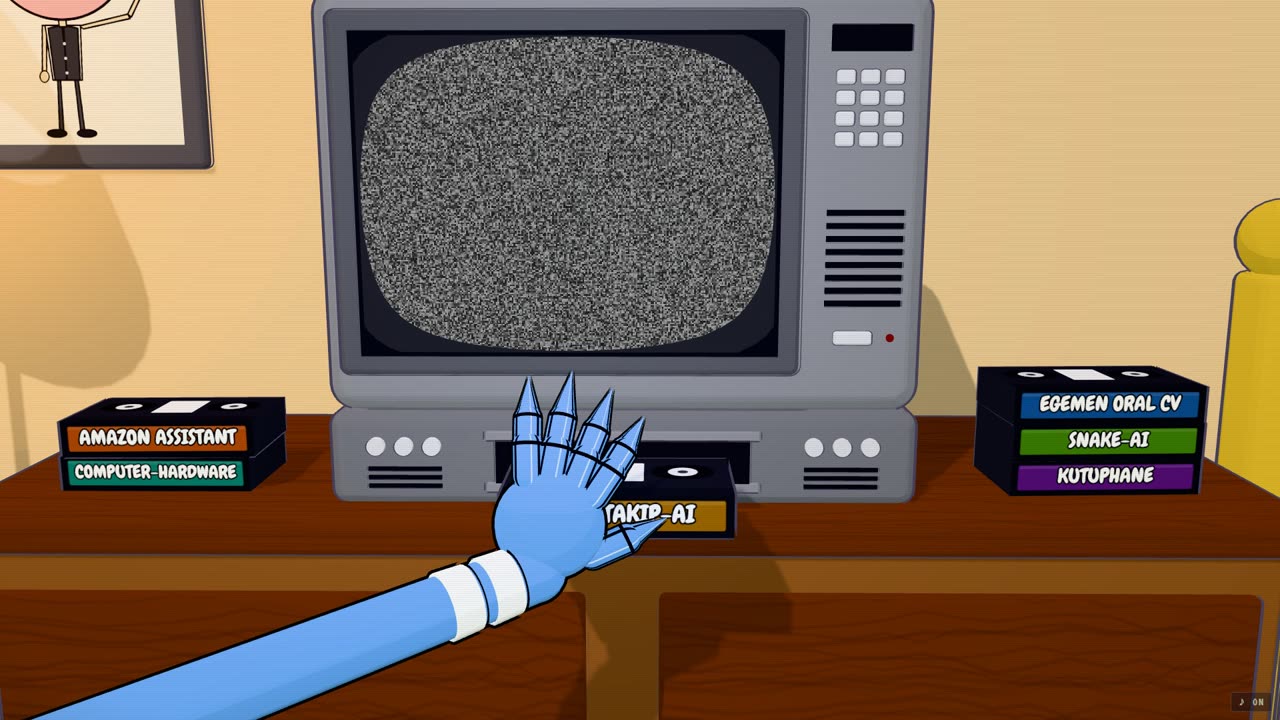
This time the result was much closer to what I had in mind: a 3D room with cartoon shading and black outlines, the yellow stairs, Pops on the wall, and an arm with joints that grabs the tape and pushes it into the VCR.
It still took a lot of back and forth. The hand alone took several rounds: first it looked like a white glove, then the fingertips turned into black blobs, then the outlines were so thin you couldn't see them. In the end I opened a screenshot in Paint, drew the lines I wanted on the fingers and sent that, and it got it right away.
Why the short prompts worked better
I've thought about this a bit, and I think most of it comes down to when I made my decisions. In the long prompt I decided almost everything before I had seen anything, so a lot of it was guessing. "NO 3D" was a guess, and it was wrong. But since I wrote everything as a rule, it all got followed.
The screenshot helped more than I expected. When I wrote things like "dark, nostalgic, cozy room", that could mean a lot of different rooms. The screenshot was the exact room I meant.
The other thing is that it's much easier for me to react to something than to describe it before it exists. Looking at the hand and saying "no, the fingers need black lines like this" was easy. Writing all of that up front would have been impossible, because I didn't know I wanted it yet.
So are short prompts always better?
No. My very first prompt was short too, and it gave me something basic. The length wasn't what changed. The later messages had a reference image, the one thing I really cared about (my five repos on the tapes), and room for the AI to decide the rest. Then I fixed whatever I didn't like when I saw it.
If the details really are the point, like an API or a data format, I'd still write them all down. But next time I build something visual, I'll start with a picture and a couple of sentences.
Why I built it
Part of the reason was my CV. A list of tools doesn't say much about a person. I wanted whoever looks at my portfolio to see that I'm open to learning, that I try things I haven't done before, and that I actually enjoy it. This project is probably the best example of that so far.
FAQ
Are short prompts better than long prompts?
For visual and creative work they often worked better for me, as long as they included a reference image and the few things that really mattered. For precise technical work, detailed requirements are still useful.
How long should a prompt be?
Long enough to say what you want, show an example and list what must not change. I'd leave the rest for feedback once you see a result.
How do I get better results from an AI coding assistant?
What helped me most: describing the result instead of the code, sending screenshots, and giving small, concrete feedback on what it actually built, even as a rough sketch.